

Delta Digital and Synergy Partner to Revolutionize HVAC Efficiency for Superyachts
Transforming Superyacht HVAC Efficiency
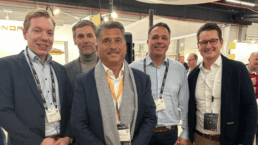
Dutch software pioneer Delta Digital and superyacht specialist Synergy – The HVAC Consultancy, part of the Bond Group, have announced an exciting new collaboration to redefine HVAC system optimization in the superyacht industry. Signed at the prestigious Dutch Pavilion at METSTRADE 2024 in Amsterdam, this groundbreaking partnership leverages cutting-edge technology and decades of expertise to create next-level energy efficiency and sustainability for superyachts.
At the heart of this collaboration is the creation of a digital twin of a yacht’s HVAC system—a virtual replica designed to test and fine-tune operational improvements before implementing them onboard. This innovation, supported by Delta Digital’s advanced platform, ensures that any adjustments enhance both performance and sustainability without disrupting the yacht’s operations.
Why It Matters: HVAC’s Role in Superyacht Sustainability
HVAC systems can account for a staggering 40–50% of a yacht’s energy consumption. While these systems are meticulously maintained for functionality, their sustainability potential often goes untapped. This collaboration flips the script by focusing on data-driven optimization, balancing performance with reduced environmental impact.
Using Delta Digital’s 3-phase methodology, an efficiency baseline for the entire HVAC system is established within 1-2 months. From there, the system’s energy consumption, performance, temperature control, and air quality are analyzed in detail. Proposed enhancements are first simulated on the digital twin, minimizing risks and ensuring maximum efficiency when implemented.
A Collaboration of Industry Leaders
Synergy, led by maritime HVAC expert Patrick Voorn, is renowned for its energy management and air quality expertise, boasting over 25 years of industry experience. Since joining the Bond Group in 2019, Synergy has cemented its position as the go-to consultancy for innovative HVAC solutions in the superyacht world.
Partnering with Delta Digital adds a powerful digital dimension to Synergy’s capabilities. “This collaboration with Delta Digital allows us to push boundaries,” says Patrick Voorn, CEO of Synergy. “With our combined expertise, we’re empowering yacht owners and operators to make informed, impactful decisions that improve efficiency, comfort, and sustainability.”
Delta Digital’s Gabriël de Jonge, director of strategy and business development, echoes this sentiment: “We’re not just solving problems—we’re identifying opportunities most didn’t even know existed. Together, we’re redefining what it means to be efficient and sustainable on a superyacht.”
Will Faimatea, CEO of Bond Technology Management, highlights the data-driven focus of this partnership: “With Delta Digital’s platform, we’re introducing metrics that provide measurable, actionable insights. It’s not just about improving efficiencies—it’s about delivering commercial savings backed by real data.”
The Future of Superyacht Comfort and Efficiency
This collaboration isn’t just a step forward for HVAC systems—it’s a leap toward smarter, greener superyachts. By combining Synergy’s deep technical expertise with Delta Digital’s innovative software solutions, this partnership is set to make waves in the industry.
Whether it’s fine-tuning air quality, cutting energy consumption, or improving overall system performance, Delta Digital and Synergy are pioneering a new era of comfort, efficiency, and sustainability for the superyacht community. For more information, reach out to us and we’ll give you a call!

Clarifying the Murky World of AV/IT
Phil Richards, Technical Consultant | Y1 Marine Engineer
Clarifying the Murky World of AV/IT
When I was an engineer on board, each day seemed to bring a new problem – especially with the AV/IT system. Some issues, while critical, such as a malfunctioning fire pump or emergency generator, often go unnoticed by guests and don’t affect them until it’s too late. Other issues, however, may seem comparatively minor, like being unable to stream Keeping Up with the Kardashians at 3 a.m. while anchored off St. Tropez, but they can significantly impact the guest experience and, in turn, affect the entire crew.
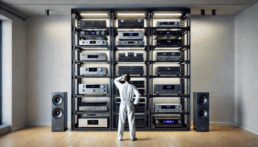
Most yacht engineers or ETOs are thrown into the world of AV/IT with minimal training. They come from backgrounds rooted in mechanics, hydraulics, and electrical work – not in networks and streaming services. And yet, when the satellite drops or the latest Apple TV stops working, it’s usually the engineer or ETO who needs to fix it. As yachts grow more reliant on streaming services and high-end AV/IT systems, many engineers are finding themselves responsible for ever more complex setups. These days engineers need to know their way around an AV rack, and that isn’t going away – its evolving, rapidly.
When I speak to serving engineers about what areas they feel they are lacking, 8 times out of 10 they will say AV/IT. Fortunately engineers now have access to courses specifically designed for superyacht AV/IT systems, and there are a few providers out there, one of which is Bond.
Most engineers and ETOs in the industry have heard of Bond, and besides managing, maintaining and repairing AV/IT systems onboard, they also offer courses aimed at engineers and crew in other departments onboard. These courses cover everything from basic troubleshooting to advanced skills.
I spoke to Sam Jablonski, Sales and Support Manager as well as one of the Course Instructors at Bond Support Services Ltd to ask about what courses they offer.
Hi Sam, great to meet you. Can you tell me a little bit about your background please?
Sure, I’m originally from a small village near Southampton in the UK, where I studied IT in college. I then went to Warsash Maritime Academy, where I studied commercial engineering and the Electrotechnical Officer course. After my time at Warsash, I started in yachting as an engineer, focusing mainly on AV/IT, and eventually became an Owner’s Rep for a fleet, managing all the tech. That included AV/IT for yachts, residences, aircraft, and even a large car collection. Five years ago, I joined Bond and now handle AV support, and I’m also one of the trainers for engineers and crew. My previous experience with Bond, while I was still on yachts, was a big reason I joined. Bond has a solid reputation in yachting for reliability and professionalism. The industry is small, and trust is essential.”
What is the most common area where you find engineers are lacking when it comes to AV/IT?
One major gap I see is engineers’ unfamiliarity with newer tech, especially with video and audio over IP. Most engineers are used to a big physical switch in the rack. Now, though, we’re dealing with virtual switchers, where everything’s over the network. That transition makes many engineers uncomfortable; they’re unsure of the AV/IT flow or how to troubleshoot these systems. I often tell them, ‘Think of AV as just another system to troubleshoot like you would in engineering. If you can’t picture the flow in your head, draw a block diagram and test systematically until you isolate the issue.’ This method of troubleshooting—starting at one end and breaking down the problem—can be unfamiliar. But after Level 1 Online (a course delivered by Bond), I start to see that click for a lot of engineers. What’s great about these courses is that they provide a structured approach to troubleshooting, giving engineers a systematic way to diagnose and solve problems, which many lack when it comes to AV/IT. It’s not just about teaching them tech skills; it’s about helping them feel confident and prepared.
Can you tell me a little about the Level 1 Online IT course, and what past participants typically say was the most valuable take-away after completing the course?
Level 1 Online is really the introduction. It provides a broad understanding of AV/IT systems -how they connect and operate. It’s useful for everyone on board because even non-engineers – stewardesses and the deck department need to know some basics, like how an iPhone can be connected to different Wi-Fi networks. We also teach them to understand and explain issues properly. If someone comes to you saying, ‘The TV isn’t working,’ you need to ask specific questions—was it in the cabin? Is the audio or video not working? Are there any error messages, like ‘No signal’? That way, they can pass on useful information and help solve the problem faster without having to go back to the guest multiple times.
I’ve seen captains, stews, and even junior crew benefit from knowing the basics. On a smaller boat, if an engineer is tied up, having a stew who can address minor AV/IT issues makes the operation smoother. The same applies to captains and chief mates who can help troubleshoot basic problems without needing to rely solely on the engineering team.
Level 1 also includes some practical fault-finding, even though it’s online. By the end of the day, participants are working through problems on their own. They also leave with a systematic approach to troubleshooting, which becomes especially valuable when they’re on board and need to tackle an issue quickly.
Participants tell us that they find Level 1 incredibly helpful, especially those with electrical backgrounds who feel AV/IT is a gap for them. They say the practical fault-finding exercises give them confidence and insights they can use right away. It’s progressive, interactive, and we cover real-life issues they’re facing. Sometimes, someone will mention a live issue that happened on their yacht that morning, and we’ll work through it as a group, which makes the learning relevant and effective.”
I can see how having the interior department understand what’s going on with the system would be incredibly helpful to engineers. I assume those attending Level 2 have some fundamental knowledge – what skills or competencies do you find most candidates improve on after completing the course?
In Level 2, we go beyond understanding; participants start interacting with equipment directly. They learn to locate issues and either fix them or clearly communicate the problem to a programmer or integrator. For instance, if the Apple TV isn’t working, they can relay specifics rather than just saying, ‘It’s not working.’ We end with practical exercises where they connect, configure, and even program systems. They get to design and configure a basic AV system from scratch, which builds the skills needed to handle larger systems on board.
Level 2 really prepares participants to troubleshoot on their own. They gain hands-on experience and develop the confidence to approach AV/IT systems systematically. Engineers find this practical component especially valuable because it gives them a clearer sense of how different equipment communicates and how to diagnose issues step-by-step.”
How do you tailor the course content to keep up with the latest advancements in yacht engineering?
We constantly update course content to keep pace with new tech. We monitor what’s coming out in the market and tailor our training to prepare engineers for it. We have good relationships with manufacturers, so we often know about new products before they’re widely available. This helps us keep the course material relevant. It’s also important to cover older tech, as many yachts still operate with older systems, which engineers need to be able to support. Understanding older systems is also a foundation for understanding newer ones, even if the newer tech may be virtual or network-based rather than physical.
Are there any real-life scenarios integrated into the course to prepare engineers for on-the-job challenges?
Our training incorporates practical, real-life scenarios because that’s what they’ll encounter on board. For example, we might discuss a common issue, like signal loss in the main saloon, and show them how to troubleshoot it systematically. Sometimes, a participant will mention an issue that happened that morning on their yacht, and we’ll work through it together. This kind of real-world example is invaluable because they’re applying what they learn to situations they face in their jobs.”
How do you think the increasing need for cybersecurity in AV/IT systems will change the responsibilities of yacht engineers?
With low-latency services like Starlink, yachts are much more exposed to cyber risks. Previously, high latency made attacks challenging, but now, it’s similar to the vulnerability an office might face. Cyber risk awareness is critical, and it’s important that everyone on board—from captains to junior crew—understands the basics of cybersecurity. Threats are real, like altering account information or even remotely accessing AV systems to turn on equipment. This training helps crew members recognize and mitigate these threats. It’s vital that cybersecurity awareness is taken seriously; yachts aren’t hidden from the radar anymore, and they’re often high-value targets.”
We also offer a comprehensive Cyber Risk Awareness course covering 14 essential topics, and we recommend it for all crew levels. Many yachts don’t have formalized policies and having everyone participate in cyber training encourages conversations on board about protocols. Simple things, like reporting a lost phone or handling passwords, are incredibly important in this setting.”
With the rapid advancement of smart technology, how do you foresee AV/IT systems on yachts evolving?
We’re seeing a shift from storing local content, like with Kaleidescape systems, to streaming. The same goes for live TV – moving away from traditional TV-RO toward streaming. But we should still prepare for outages. A backup, such as local content storage, is wise. It’s about managing the guest experience; if guests are unable to watch their preferred content, it impacts their trip. So, even though streaming is the future, having contingency plans ensures the yacht can still deliver a seamless experience.”
Finally, have you ever seen an engineer attempt a quick fix that somehow caused more chaos than the original issue
An example that comes to mind is an engineer adjusting the resolution on an Apple TV to improve the picture quality, but the AV system couldn’t support it, and they lost video in the main saloon an hour before the guests were to come onboard! The issue wasn’t complicated to fix, but it was avoidable. I remind engineers not to touch a system that’s working right before guests arrive! Another thing we teach is that if you’ve gone through all the troubleshooting steps and everything still points to a problem, it’s likely that one of your tests was flawed. Start over systematically—it’s a lesson that can save hours of confusion.”
If you want to reach out to Sam or Bond directly to find out about their courses on AV/IT level 1 and 2 or Cyber Security, please contact training@bondtm.com
The Welfare of Superyacht Crew - a Support Lifeline
The Welfare of Superyacht Crew - a Support Lifeline - yachtcrewhelp.org to become a reality...
The International Seafarers’ Welfare and Assistance Network (ISWAN) has welcomed Bond TM as the primary partner for its new online toolkit for superyacht crew – with a focus on fundraising initiated by Colin Squire & Brendan O’Shannassy on a webinar in early May.
A survey conducted by ISWAN in 2018 found that 82% of superyacht crew experienced low crew morale sometimes, often or always, and 55% of female respondents found accessing mental health care to be an occasional or regular challenge. In order to be more visible to superyacht crew in need, ISWAN has been fundraising for Yacht Crew Help – a new online toolkit to provide crew with a direct line to free, 24-hour emotional support, guidance, and useful health and welfare resources.
Alongside gallant fundraising efforts from Colin Squire of Yachting Matters and Captain Brendan O’Shannassy, President of the ISS Captain’s Committee, Bond TM have contributed a generous €10,000 to help make the new platform a reality.
Will Faimatea, Director and Founder of Bond TM, said: “˜Having previously been crew for many years I recognise the topic of mental health is an issue like it is everywhere but obtaining support and assistance whilst you are crew can be difficult. Crew wellbeing is an area that can easily be overlooked.
“˜After reading an article by Colin Squire about the drive to raise funds for Yacht Crew Help I spoke to Brendan O’Shannassy and Caitlin Vaughan whilst they were on the path of this project and they explained what they were trying to achieve. As well as the helpline this project increases awareness in the industry that the mental health and wellbeing of crew is just as important as it is in other walks of life and everyone should learn to recognise any warning signs for themselves and in others and do what they can to assist.
“˜With Yacht Crew Help crew will not have to search too far to obtain help if they think they may need it and the fact that they know help is close by may offer support and comfort. Contributing back to the yacht industry that I am proud to be part of is in itself rewarding but what makes this even more worthwhile is being able to contribute to ISWAN to start Yacht Crew Help for those who may need it.‘

ISWAN’s Project Manager Caitlin Vaughan said: “˜We have been so fortunate to be supported by wonderful people and organisations within the superyacht industry who recognise the need for accessible mental health support for crew. We’re delighted to be partnering with Bond TM whose industry expertise will be invaluable to the development of the toolkit.’
Further generous pledges are expected to be announced in the coming weeks, including the final amount raised by a fundraising effort from Burgess. ISWAN would also like to thank MHG Insurance Brokers and wilsonhalligan who provided the initial support needed for ISWAN’s 2018 research and widely acknowledged report on The Welfare of Superyacht Crew.
Fundraising continues to support the operation of ISWAN’s helpline for seafarers and efforts to address the recommendations in ISWAN’s superyacht crew welfare research report. Companies, organisations and individuals wishing to show their support can do so at yachtcrewhelp.org.
Yacht Crew Help would not have been possible without the support of Colin Squire, Brendan O’Shannassy, Bond TM and ISWAN looks forward to working in partnership on this new platform to support superyacht crew worldwide.
International Seafarers’ Welfare and Assistance Network (ISWAN): A charity and membership organisation which works to promote and support the welfare of seafarers all over the world. The free, 24-hour, multilingual helpline, SeafarerHelp, is one of the direct welfare services that ISWAN provides to seafarers. Others include relief funds for seafarers and their family members in need and a range of health information resources. ISWAN works with companies, unions, governments, welfare organisations and ports for the implementation of the ILO Maritime Labour Convention, 2006. ISWAN supports those who establish and provide welfare facilities and services in port and on ships. ISWAN is funded by membership subscriptions, grants from foundations, sponsorship and earned income. For more information, visit www.seafarerswelfare.org.